Datanami
 EnterpriseAI
 HPCwire Japan
 QCwire
 HPC & AI Wall Street
As a consumer and provider of cloud services, Lockheed Martin is in a position to benefit from the advancement of open cloud standards. In an interview earlier today at Open Data Center Alliance’s Forecast 2012 event in New York City, Curt Aubley, the VP & CTO of Cyber Security & NexGen Innovation at Lockheed Martin, as well as ODCA President, explained that moving the market forward with open solutions enables Lockheed as a consumer to have more options, avoid lock-in and get the benefits of new technologies so that they can move faster in a more affordable fashion. On the provider side, as a large-scale systems integrator, the VP notes that standards are desirable. Lockheed’s customers don’t want lock-in; they want “mission-focused solutions that help them get their job done in an open fashion so they can be affordable to their customers.”
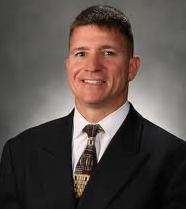 “We’re not defining the standards,” says Aubley. “We’re defining the usage models of what we want to do with cloud computing and the things that we think need to be done so that it removes the hurdles, so we can leverage more cloud computing. Then the standards and vendor community takes that into consideration. They’re basically telling the vendors, ‘this is what we’re looking for.'”
When it comes to standards, Aubley says there is still a long way to go, but the good news is there is growing recognition that we need them, and there are groups like the Cloud Security Alliance working to define them. As an end user, you want clear exit criteria so you can make changes to meet business goals. Aubley’s message to service providers is if you have a locked solution that can limit who will use your solution.
When asked for examples of the cloud offerings that they provide, Aubley first points out that Lockheed’s primary goal is their customers’ success. The defense contractor is now going to market with what they are calling solution-as-a-service, which provides secure private clouds, such as Lockheed’s BlackCloud. They also offer a secure community cloud for the federal government. Lockheed has partners in the public cloud space too and they broker across all three models.
Returning to his original proposition, Aubley tells me “it’s not about what cloud we have to offer; it’s about what solution the customer needs — so we can use one of our standard solutions or we can tailor to their specific solution needs.” To that end, they have a number of partners they can turn to, such as Intel, NetApp, Cisco, VMWare, EMC, and others, or they can partner with a unique small company, to help them design a custom solution.
Lockheed Martin, as a very large company, uses the full range of cloud deployment models, public, private and hybrid, for its internal workloads. On the public side, they leverage Terremark and Amazon, while on the private side, they’ve designed their own clouds using open source solutions, both OpenStack and CloudStack, and have also used commercial solutions from Microsoft and VMWare.
One interesting use case took advantage of Microsoft Windows Azure to develop a cloud-based biometric-enabled identity management solution for the Caribbean Games. Lockheed also has a hybrid technology that allows them to broker across Amazon and Terremark as well as their private clouds. They are an Amazon partner and they resell some of their services through their brokering for government customers.
Asked about his experience with open source-based cloud, Aubley reports the defense contractor been using it for two years now and he believes the space is maturing nicely. It takes lot of work, says Aubley, but he indicates that’s par for the course for open source projects. Because they have a heavy R&D focus, the company is always looking to what’s next and sees this space as one of those areas that can improve affordability for their customers. While they are mainly a consumer of OpenStack, they have contributed “lightly” to the code base, and may have more to offer in the future.
As for HPC workloads, Lockheed has some large contracts with government customers doing high-performance computing work that mostly use private cloud. He reports that typically these are large private clouds (as opposed to public clouds) because of the sensitivity of the work. These users are not ready for the public cloud because of government regulations and other compliance issues, but Aubley anticipates a way forward. Soon we will be able to leverage the public cloud for certain data sets, he says, then bring that back and mine it with in-house compute capabilities.
Asked what an HPC cloud looks like for Lockheed, Aubley explained how they are different from general IT clouds. They’ve been doing HPC for over ten years — where cloud comes in is taking pieces of cloud technology to improve automation and self-service capabilities in order to lower the cost of high-performance computing. About six months ago, Lockheed partnered with Microsoft to develop an HPC solution for an Army customer.
As for how to decide between using open source and a vendor product, Aubley indicates those types of trades are par for the course for a systems engineering company. To put it simply: it depends on the objective of the customers. For example, he says, “If you don’t have the CAPEX funding to make a software investment but you have a tech-savvy team, you may chose open source, on the other hand, if you have smaller teams and more CAPEX, you may consider a vendor partner to leverage their resources. There is never one perfect fit; it depends on customer need.”
“If you need extremely highly-reliable, high-performance five-nines availability with one-hour response support, you are probably going to go with a vendor partner, [whereas] if you’re scaling out to fifty-thousand nodes and if you lose 10-20 percent of them, it’s not a big deal, that’s when open-source technology really shines. There are different trade-offs,” says Aubley.
I asked Aubley if he’s heard the criticisms that open-source cloud may not yet be ready for primetime. At first he seemed to dismiss the notion, suggesting it was perhaps merely an instance of FUD and offering an added admonishment to consider the source. Whether or not the criticisms have merit, we can’t know for sure without understanding the particulars of a given deployment attempt. Open source cloud is not for everyone, and I think Aubley would be the first to acknowledge this. When an open source cloud project is reported not to work, there may be other factors involved, some unmet project need in the area of training or support processes, as Aubley points out, further noting that an open source project can be just as successful as a commercially-based cloud, but there needs to be rigorous program management, engineering discipline, and operational processes.
Curt Aubley delivered the welcome keynote for the Open Data Center Alliance’s Forecast 2012 one-day conference, which took place June 12, 2012, colocated with Cloud Expo in New York City.