Univa HPC Job Bank
HPC in the Cloud


Dedicated to covering high-end cloud computing
in science, industry and the datacenter

Language Flags

Blog: Behind the Cloud

Univa Revving the Grid Engine Revival


There is finally a happy ending to the Grid Engine saga following Oracle’s formal acquisition of Sun in January 2010, which I described in my post The Fate of Oracle’s Grid Engine.

Word of this pleasant conclusion arrived today via a press release from Univa, stating, “the principal engineers from the Sun/Oracle Grid Engine team, including Grid Engine founder and original project owner Fritz Ferstl, are joining Univa.”

This is music to the ears of all people who are (and were) involved in grid computing, and now cloud computing since its emergence a decade and a half ago.

Perhaps the press release does not say it all, however… Univa is now home to the most capable and experienced Distributed Resource Management  (DRM) team in the entire world.

Univa’s founders  are the” fathers “ of grid computing: Ian Foster,  who has been described as “one of the rock stars of grid computing” as well as other heroes of HPC, including Carl  Kesselman and Steve Tuecke.
 
Univa will be acquiring significant expertise, including Fritz Ferstl, who will serve as the company’s Chief Technology Officer and direct Univa’s technology strategy and its burgeoning EMEA push.

As the former product manager of Sun Grid Engine, I had worked with Fritz Ferstl and his engineering team in Sun, and earlier in Gridware and Genias  for fifteen years. Fritz  is not only an extraordinary software architect and visionary.  He delivers software with a legendary Bavarian precision. He has a rare capacity to see the essence in every project and to manage impeccably the details at the same time.

The CEO of Univa, Gary Tyreman, is one the brightest and most business savvy cloud DRM executives around .  Bil Bryce, VP products is ex-Platform Computing (like Gary, like me) one of the stars in DRM technology and behind the creation of Univa’s  cloud management product.

Fritz’s mentor is my mentor--Wolfgang Gentzsch, the original founder of Genias. Wolfgang, by the way, wrote detailed article on the announcement today called, “Grid Engine Finds Safe Harbor at Univa” with details about the history and role of Grid Engine in grid and cloud computing.

I would like to refer from now on to Univa’s Grid Engine (UGE), as DRM software. It’s fashionable to call any software that does some virtualization or round-robin scheduling, “cloud software” and perhaps we should just call UGE cloud software, even though many realize it is much more than that.

It is the heart of a compute intensive cloud and at this moment, it handles the essential load balancing and resource allocation of some of the most complex clusters in the world. A cloud is nothing but a grid that can “burst” on demand and bring in additional nodes, memory, etc. required to keep the users’ service level agreement constant. The notion of high low priority that grid administrators allocate to happy or un-happy users is replaced by a billing metering system. Unlike grid computing, users will pay per use for the privilege.

This is all fine and dandy, but without a robust DRM, a cloud will not perform at peak. Whether we call the cluster a grid or a cloud, it has more to do features related to the business model of clouds versus grids. But for building solid, production, reliable, peak performance clouds, UGE will be the best ingredient.

Univa’s  Grid Engine will revitalize a market for robust DRM software, whether used in Univa’s own Data Center and cloud product line  or by any provider of private and hybrid clouds.

Before In wrote this last paragraph, I googled the sentence “Do you like Grid Engine?” I got 301,000 results in 0.11 seconds. Let me clarify: three hundred and one thousands in one tenth of a second.

I don’t know whether to praise Google or to praise Grid Engine’s revival first. Google already has plenty of praises—but Grid Engine’s revival is one the nicest event to witness and celebrate.

Posted by Miha Ahronovitz - January 18, 2011 @ 6:10 PM, Pacific Standard Time

Miha Ahronovitz

Miha Ahronovitz

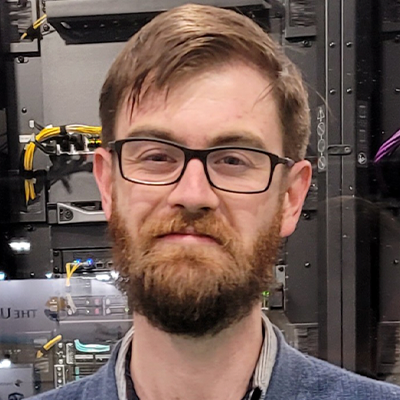
Miha Ahronovitz specializes in cloud software, products and business models and led product and business strategy for Sun Microsystem’s HPCGrid and Cloud division. Following Sun’s merger, Miha is now the Principal of Ahrono Associates.

More Miha Ahronovitz

Aspen

Recent Comments

No Recent Blog Comments

Feature Articles

CometCloud: Using a Federated HPC-Cloud to Understand Fluid Flow in Microchannels

The ever-growing complexity of scientific and engineering problems continues to pose new computational challenges. Thus, we present a novel federation model that enables end-users with the ability to aggregate heterogeneous resource scale problems. The feasibility of this federation model has been proven, in the context of the UberCloud HPC Experiment, by gathering the most comprehensive information to date on the effects of pillars on microfluid channel flow.
Read more...

CERN, Google, and the Future of Global Science Initiatives

Large-scale, worldwide scientific initiatives rely on some cloud-based system to both coordinate efforts and manage computational efforts at peak times that cannot be contained within the combined in-house HPC resources. Last week at Google I/O, Brookhaven National Lab’s Sergey Panitkin discussed the role of the Google Compute Engine in providing computational support to ATLAS, a detector of high-energy particles at the Large Hadron Collider (LHC).
Read more...

Avoiding Scientific Computing Bottlenecks in the Cloud

Frank Ding, engineering analysis & technical computing manager at Simpson Strong-Tie, discussed the advantages of utilizing the cloud for occasional scientific computing, identified the obstacles to doing so, and proposed workarounds to some of those obstacles.
Read more...

Short Takes

NASA Builds 'Climate in a Box'

May 23, 2013 | he study of climate change is one of those scientific problems where it is almost essential to model the entire Earth to attain accurate results and make worthwhile predictions. In an attempt to make climate science more accessible to smaller research facilities, NASA introduced what they call ‘Climate in a Box,’ a system they note acts as a desktop supercomputer.
Read more...

Running Computational Fluid Dynamics in the Cloud

May 16, 2013 | When it comes to cloud, long distances mean unacceptably high latencies. Researchers from the University of Bonn in Germany examined those latency issues of doing CFD modeling in the cloud by utilizing a common CFD and its utilization in HPC instance types including both CPU and GPU cores of Amazon EC2.
Read more...

In Support of Cloud-based Rendering

May 10, 2013 | Australian visual effects company, Animal Logic, is considering a move to the public cloud.
Read more...

Internet2 Awards Program Seeks Innovative Applications

May 10, 2013 | Program provides cash awards up to $10,000 for the best open-source end-user applications deployed on 100G network.
Read more...

Sponsored Whitepapers

Best Practices in Big Data Storage

05/10/2013 | Cleversafe, Cray, DDN, NetApp, & Panasas | From Wall Street to Hollywood, drug discovery to homeland security, companies and organizations of all sizes and stripes are coming face to face with the challenges – and opportunities – afforded by Big Data. Before anyone can utilize these extraordinary data repositories, however, they must first harness and manage their data stores, and do so utilizing technologies that underscore affordability, security, and scalability.

Exploring the Potential of Heterogeneous Computing

04/02/2012 | AMD | Developers today are just beginning to explore the potential of heterogeneous computing, but the potential for this new paradigm is huge. This brief article reviews how the technology might impact a range of application development areas, including client experiences and cloud-based data management. As platforms like OpenCL continue to evolve, the benefits of heterogeneous computing will become even more accessible. Use this quick article to jump-start your own thinking on heterogeneous computing.


Sponsored Multimedias

Blogs by Topics

Blogs by Author

HPC Blogroll

ISC

Featured Events


  • June 16, 2013 - June 20, 2013
    ISC'13
    Leipzig,
    Germany

  • June 17, 2013 - June 18, 2013
    Forecast 2013
    San Francisco, CA
    United States


HPC in the Cloud Conferences & Events